

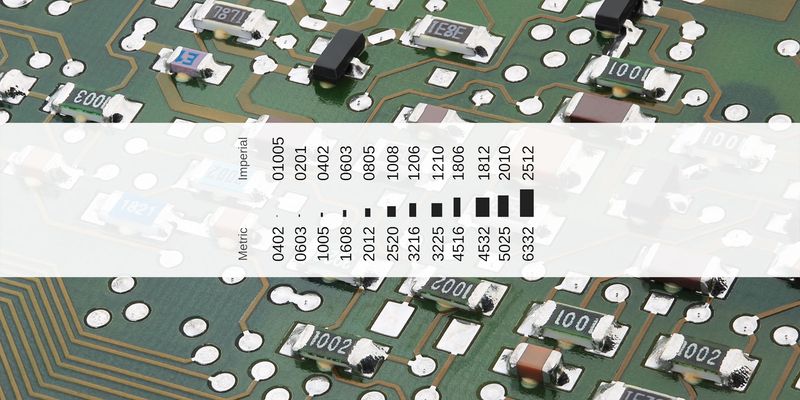
In printed circuit board assembly (PCBA), surface-mount technology (SMT) is generally used to attach surface-mount devices (SMD) onto a printed circuit board (PCB) by soldering the leads directly on the surface of the PCB. In the past, thru-hole technology (THT) was the norm: with THT, wire leads are soldered through small holes on the printed circuit board. The technological transition from THT to SMT technology brought with it a great deal of automation and efficiency gains. The automated pick-and-place technology behind SMT also allows for a smaller-sized PCB to be used, thus, optimizing product design while also achieving lower costs and faster production times compared to manual THT assembly.
With the evolution of SMT PCBA assembly, the shape and sizes of SMD surface-mount devices were normalized according to standards set forth by the Electronics Industry Alliance (EIA) and the Solid State Technology Association (formerly, JEDEC). This standardization facilitates product design, component design, and electronics manufacturing worldwide.
SMD Resistors
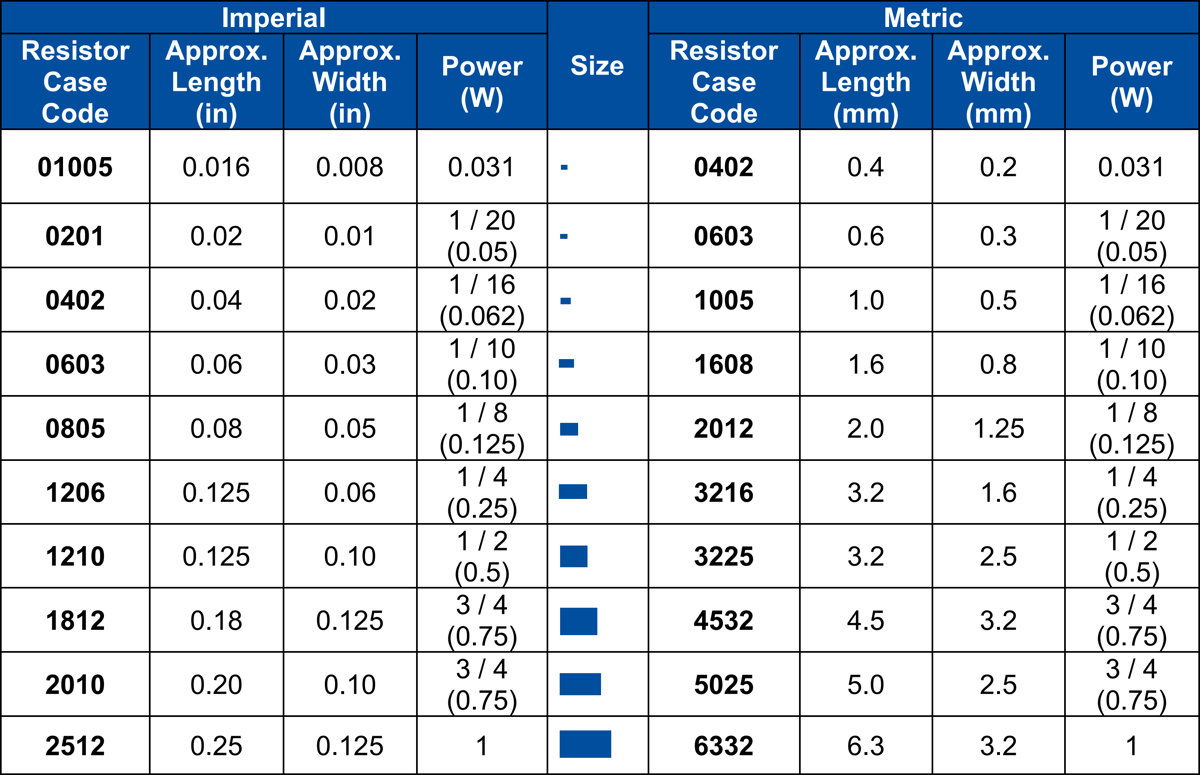
The length and width of an SMD resistor case can be identified by the package code used. For example, an imperial 0805 resistor case will have a length of 0.08 inches and a width of 0.05 inches, while an imperial 0603 resistor package will have a length of 0.06 inches and a width of 0.03 inches. The imperial code is more commonly used in the PCBA industry.
The table below lists the different commonly used resistor packages and resistor cases in SMT assembly for PCBA:
MELF Resistors
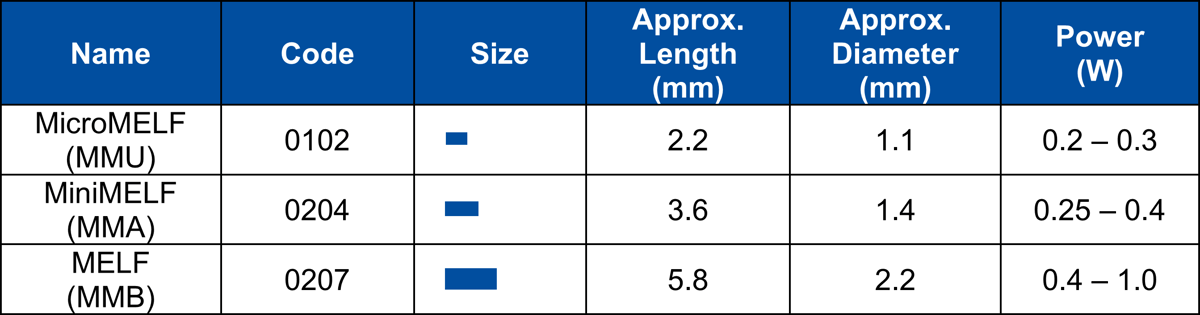
MELF resistors (Metal Electrode Leadless Face) are a subset of SMD resistors with a cylindrical shape that is metalized at its ends. They are used in high-precision applications since they have a low failure rate, high moisture resistance, and are able to withstand high temperatures. There are three main MELF packages:
- MicroMELF (MMU, 0102)
- MiniMELF (MMA, 0204)
- MELF (MMB, 0207)
THT Resistors
Through-hole Technology (THT) components have two (2) general types of termination:
- Axial - the leads are found on both sides of the component
- Radial - the leads are found on one end of the component (same side)
THT axial resistors have two leads protruding from both ends of its body. The leads are shaped according to the PCB footprint (or customer request) before they are inserted through the holes and soldered on the opposite end. If necessary, excess lead length on the opposite end is trimmed once the THT resistor is soldered.
THT radial resistors have two leads protruding from the same side of its body. These are usually mounted onto the PCB at a vertical position so that the component is upright or perpendicular to the board. These are commonly used for projects where footprint spacing is essential because they occupy relatively less overall space compared to their axial counterparts.
Unlike SMT resistors, THT resistors do not have standardized sizes because different manufacturers use varying dimensions depending on the power rating (W) required. If a specific size is needed for a THT resistor, the manufacturer datasheet must be referenced for its exact dimensions.