

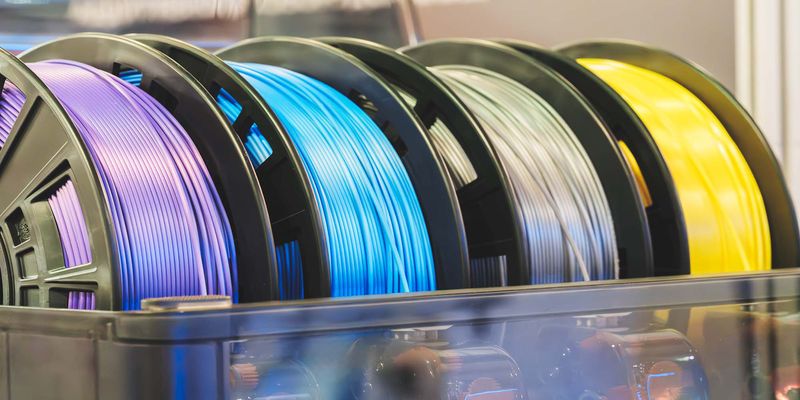
3D printing, or additive manufacturing, serves as a versatile alternative to traditional injection molding for producing custom enclosures, particularly in industrial settings such as DIN rail housings for electronics. Unlike injection molding, which requires expensive tooling and longer lead times, 3D printing enables rapid prototyping, short iteration cycles, and cost-effective production of low-volume or highly customized parts. This flexibility is especially valuable in sectors like automation, telecommunications, and consumer electronics, where enclosures must protect sensitive components while meeting stringent safety standards.
A critical consideration for these applications is material flammability. Flame retardant (FR) filaments are designed to self-extinguish and limit fire propagation, often achieving certifications like UL94 V0, which requires materials to stop burning within 10 seconds without dripping flaming particles. This is essential for ensuring compliance with safety regulations in environments prone to electrical faults or high heat, reducing risks in industrial and public spaces.
The market for FR 3D printing materials is experiencing significant growth, driven by increasing demand in safety-critical industries such as aerospace, automotive, and electronics. Global market analyses project the fire-retardant 3D printing filament segment to expand fueled by advancements in additive manufacturing and regulatory emphasis on fire safety. This surge reflects broader adoption of 3D printing for functional end-use parts beyond prototyping.
FR filaments are typically based on common thermoplastics like PLA, PETG, ABS, and PC, modified with additives to enhance fire resistance. These materials strike a balance between printability, mechanical properties (e.g., stiffness, heat resistance, and impact strength), and aesthetics (e.g., glossiness, layer adhesion, and print quality). However, the integration of flame retardants introduces trade-offs that users must consider.
The following sections provide an overview of key FR filament categories, including material introductions and available options with details on certification, pricing, and performance.
What UL and UL94 V0 mean
Underwriters Laboratories (UL) is an independent safety organization that tests and certifies materials and components. UL 94 is the UL standard that classifies the flammability of polymeric materials. The widely referenced vertical-burn ratings are V-2, V-1, and V-0, where V-0 is the most stringent in that group.
For a UL94 V-0 rating, test specimens are exposed to a flame twice for 10 seconds each (vertical orientation). To pass V-0:
- The flame must extinguish within 10 seconds after each application.
- The total flaming time across all specimens is limited (typically ≤ 50 seconds for five samples).
- There must be no flaming drips that ignite cotton placed below.
- Afterglow must be brief (typically ≤ 30 seconds).
Importantly, UL 94 ratings are thickness-specific (for example, V-0 at 0.75 mm, 1.5 mm, or 3.0 mm). Certified materials receive a UL “Yellow Card” with a UL file number that states the exact thicknesses and conditions under which the rating applies, and are subject to ongoing surveillance. Marketing phrases like “meets UL94 V0” or “designed to meet V0” indicate internal or third‑party lab testing, not an official UL listing. For safety‑ critical or regulated applications, prefer officially listed materials and verify details (file number and thickness) in the manufacturer’s datasheet or the UL database.
Note that UL 94 tests are performed on standardized specimens. 3D‑printed parts can exhibit different behavior depending on print orientation, infill, and processing. If end‑use compliance is required, testing the printed part at the final wall thickness may be necessary per the applicable standard.
PLA-Based Flame Retardant Filaments
Polylactic Acid (PLA) is a biodegradable thermoplastic derived from renewable resources, offering excellent printability with minimal warping and no need for an enclosed printer. FR variants incorporate halogen-free additives to achieve UL94 V0 ratings while maintaining good layer adhesion and a matte finish. However, PLA FR has moderate stiffness (~2200-2500 MPa), heat resistance (~55-60°C), and impact strength (~8-10 kJ/m²). In industrial settings, the limited heat resistance often becomes a constraint (e.g., near power supplies, motors, or enclosed DIN‑rail cabinets). Additionally, the FR additives can narrow the processing window and alter flow/adhesion behavior, making PLA FR less trivial to print than standard PLA—offsetting one of PLA’s main advantages. As a result, PLA FR is generally best for low-heat prototypes rather than demanding industrial enclosures.
| Filament Name | Certification Status | Price per kg (approx., net) | Notes |
|---|---|---|---|
| FlameGuard PLA (Spectrum Filaments) | Claimed (designed to meet UL94 V0) | €40 EUR | Halogen-free, high crystallinity; prints at 210-240°C; good adhesion, matte finish. |
| PrimaSelect PLA Flame Retardant (PrimaCreator) | Claimed (V0) | €32 EUR | Easy printability, stiffness 2400 MPa, heat ~55°C; smooth matte. |
| Premium PLA Flame Retardant (FormFutura) | Lab tested (meets UL94 V0) | €28 EUR | Self-extinguishing, eco-friendly; stiffness ~2200 MPa, heat ~60°C. |
| Kexcelled PLA Flame Retardant | Lab tested (meets UL94 V0) | €33 EUR | Halogen-free, exceptional performance; good tenacity, matte visuals. |
| Generic FR PLA (various brands, e.g., Amazon) | Claimed (UL94 V0) | €23 EUR | Low smoke, high tenacity; elongation >10%, matte white/black. |
PETG-Based Flame Retardant Filaments
Polyethylene Terephthalate Glycol (PETG) provides durability, low moisture absorption, and chemical resistance. FR PETG uses halogen-free additives for UL94 V0 compliance, offering moderate stiffness (~1900-2100 MPa), heat resistance (~70-80°C), impact strength (~8-12 kJ/m²), and glossy finishes with strong layer adhesion. It is well-suited for balanced industrial enclosures, though slight stringing may occur.
| Filament Name | Certification Status | Price per kg (approx., net) | Notes |
|---|---|---|---|
| Prusament PETG V0 (Prusa) | UL listed (E527425) | €51 EUR | Self-extinguishing in 10s, tough; prints easily, low warp, glossy. |
| PET-G FR V0 (Spectrum Filaments) | Claimed (designed to meet UL94 V0) | €42 EUR | Halogen-free, low shrinkage; Vicat 70°C, impact ~8 kJ/m², glossy. |
| PETG V0 (Fiberlogy) | Lab tested (meets UL94 V0) | €46 EUR | Self-extinguishes <10s; stiffness ~1900 MPa, heat ~80°C, glossy. |
| FRJet (Filament PM) | Lab tested (meets UL94 V0) | €37 EUR | High printability, stiffness ~2100 MPa, heat ~75°C; minimal layers. |
| Infil PETG FRHF (3DFILS) | Claimed | €32 EUR | Easy print, glossy white; good adhesion. |
| Premium PETG Flame Retardant (FormFutura) | Lab tested (meets UL94 V0) | €29 EUR | High gloss, stiffness ~2000 MPa, heat ~70°C. |
ABS-Based Flame Retardant Filaments
Acrylonitrile Butadiene Styrene (ABS) and its UV-resistant variant ASA deliver toughness, chemical resistance, and higher heat deflection (~90-100°C). FR modifications, often halogen-free, provide stiffness (~2200-2300 MPa) and impact strength (~14-15 kJ/m²), with smooth or matte surfaces. These require enclosed printers to mitigate warping, making them ideal for durable, heat-exposed enclosures.
| Filament Name | Certification Status | Price per kg (approx., net) | Notes |
|---|---|---|---|
| ABSpro Flame Retardant (FormFutura) | Lab tested (meets UL94 V0) | €64 EUR | PC-ABS blend, stable; prints 240-265°C, heat ~100°C. |
| Firewire FR-ABS (3DXTech) | Lab tested (UL94 V0) | €91 EUR | Self-extinguishing for aerospace; stiffness ~2300 MPa, smooth. |
| Inslogic ABS FR V0 | Lab tested (UL94 V0) | €54 EUR | Low absorption <1%, high toughness; matte black. |
| eSUN ABS-FR (eABS Max) | Claimed (UL94 V0 level) | €24 EUR | High impact/heat; stiffness ~2200 MPa, good adhesion. |
| Flame Retardant ABS (Coex 3D) | Lab tested (UL94 V0) | €48 EUR | Premium for self-extinguishing; impact ~14 kJ/m². |
| Flame Retardant Black ABS (Virtual Foundry/Coex) | Claimed (UL94 V0) | €46 EUR | Similar to Coex, smooth finish. |
| ApolloX FR (FormFutura, ASA-based) | Claimed (UL94 V0) | €36 EUR | UV-resistant, easy print; stiffness ~2400 MPa, matte surface. |
| FlameGuard ASA 275 (Spectrum) | Lab tested (UL94 V0) | €89 EUR | UV-resistant, high thermal stability; glossy finish. |
| Ultrafuse PC/ABS FR (BASF) | UL listed (V0) | €96 EUR | High impact, thermal resistance; smooth finish. |
PC-Based Flame Retardant Filaments
Polycarbonate (PC) inherently resists flames, enhanced by additives for UL94 V0. It offers high stiffness (~2500-2700 MPa), heat resistance (~105-115°C), and impact strength (~11-12 kJ/m²), with glossy or translucent finishes and robust adhesion. PC FR suits high-risk enclosures but demands drying and enclosures due to moisture sensitivity.
| Filament Name | Certification Status | Price per kg (approx., net) | Notes |
|---|---|---|---|
| PolyMax PC-FR (Polymaker) | Lab tested (UL94 V0) | €51 EUR | Young's modulus 2600 MPa, Charpy 11.7 kJ/m²; glossy. |
| Bambu Lab PC FR | Lab tested (94-2023 V0 certified) | €40 EUR | Flame resistance top-tier, impact 55 kJ/m²; translucent. |
| Jabil PC 1500 FR | Claimed (V0) | €55 EUR | Easy printing, strength for enclosures; heat ~105°C. |
| TECAFIL PC FR (Ensinger) | Lab tested (FAR 25.853/V0) | €74 EUR | Transparent, impact-resistant; good for Ultimaker. |
| Nanovia PC V0 | Claimed (V0) | €64 EUR | Translucent, chemical resistance; stiffness 2700 MPa. |
| Firewire FR PC+ABS (3DXTech) | Lab tested (UL94 V0) | €110 EUR | Higher strength than ABS; heat ~110°C, durable. |
| Kimya PC-FR | Claimed (V0) | €138 EUR | Compliance with fire safety regs; high impact, professional use. |
Other Advanced Flame Retardant Filaments
High-performance polymers like Nylon (PA), PEEK, PEKK, PEI (ULTEM), PVDF, and PPSU provide inherent FR properties or ceramic/glass fillers for extreme conditions. These deliver superior stiffness (>3000 MPa), heat resistance (>150°C), and impact strength (>20 kJ/m²), ideal for aerospace or rail applications, though printing is complex and costly.
| Filament Name | Certification Status | Price per kg (approx., net) | Notes |
|---|---|---|---|
| PA6 CS20 FR V0 (Spectrum) | Lab tested (UL94 V0 with ceramic fillers) | €109 EUR | Halogen-free, low moisture; insulation, matte for rail. |
| Nylon Flame-Retardant (Filamatrix) | Claimed (V0-rated) | €78 EUR | Chemical/heat resistant; impact ~25 kJ/m², matte. |
| PEEK / PEKK (Victrex, Evonik, 3DXTech) | Inherent FR (meets V0) | €274 EUR+ | Stiffness 4000 MPa, heat >200°C; smooth, aerospace. |
| ULTEM 9085 (PEI) | UL listed (V0, FST-certified) | €276 EUR+ | Low smoke; heat 180°C, translucent adhesion. |
| PVDF (Nanovia, Solvay Solef) | Inherent FR (UL94 V0) | €246 EUR | Stiffness 2500 MPa, low friction; matte hardware. |
| PPSU (Forward AM) | Claimed (impact-strong) | €120 EUR | Hydrolysis-resistant, heat 190°C; smooth. |
| PPE-PS (3DXTech) | Claimed (FR-rated) | €92 EUR | High-temp, stiffness 2800 MPa, heat 120°C. |
| Nanovia Insublend | Lab tested (UL94 V0, high voltage) | €87 EUR | Insulating, weatherproof; for outdoor electrical. |
| Markforged Onyx FR | UL listed (E506754, V0) | €239 EUR | Carbon-filled Nylon, low FST; high performance. |
| ThermaX PES (3DXTech) | Claimed (FR) | €179 EUR | High-temp, natural; for demanding apps. |
| Novamid AM1030 FR (DSM) | UL listed (Blue Card certified V0) | €159 EUR | Halogen-free, low smoke; for aerospace/transit. |
| PA6/66-GF20 FR (Clariant/Avient) | UL listed (V0 certified) | €184 EUR | Glass-filled, strong; for rail/electronics. |
| PA Rail (Nanovia) | Lab tested (EN 45545, flame retardant) | €115 EUR | Non-halogen, low smoke; for railway sector. |
| TPU 90A-FR (Essentium) | UL listed (V0 & FAR 25.853 certified) | €120 EUR | Flexible, abrasion-resistant; for insulators/gaskets. |
Properties Comparison Table
| Material Type | Typical UL94 Status | Stiffness (MPa) | Heat Deflection (°C) | Impact (kJ/m²) | Price Range/kg (EUR) | Key Trade-Offs |
|---|---|---|---|---|---|---|
| PLA FR | Mostly claimed | 2200-2500 | 55-60 | 8-10 | 23-40 | Low heat, easy print |
| PETG FR | UL listed (some), lab/claimed | 1900-2100 | 70-80 | 8-12 | 29-51 | Balanced, low warp |
| ABS FR | Lab tested/claimed | 2200-2300 | 90-100 | 14-15 | 24-96 | Warping, durable |
| PC FR | UL listed/lab tested | 2500-2700 | 105-115 | 11-12 | 40-138 | Moisture sensitive, high impact |
| Advanced | UL listed (some), inherent | 3000+ | 150+ | 20+ | 87-276+ | Complex print, extreme conditions |
Considerations for Printing with Flame Retardant Filaments
While FR filaments enhance safety, the additives that confer flame retardancy—such as phosphorus or nitrogen compounds—can introduce challenges in printing. These materials often exhibit altered flow characteristics, increased brittleness, or reduced ductility compared to non-FR counterparts, potentially leading to issues like poor layer adhesion, stringing, or inconsistent extrusion. Many FR filaments, particularly those based on PC, Nylon, or PETG, are hygroscopic, meaning they absorb moisture from the air, which can cause bubbling, popping, or weak prints if not addressed. To mitigate this, filaments should be stored in dry conditions and dried (e.g., at 60-80°C for 4-6 hours) before use.
Color availability is another limitation; FR additives can interfere with pigmentation, resulting in restricted options often limited to black, white, natural (off-white or translucent), or gray. This contrasts with standard filaments, which offer broader palettes. Users should verify printer compatibility, as higher nozzle temperatures or enclosures may be required for optimal results.
When selecting FR filaments, prioritize certified options for compliance and test prints to ensure mechanical and aesthetic performance aligns with application needs.