

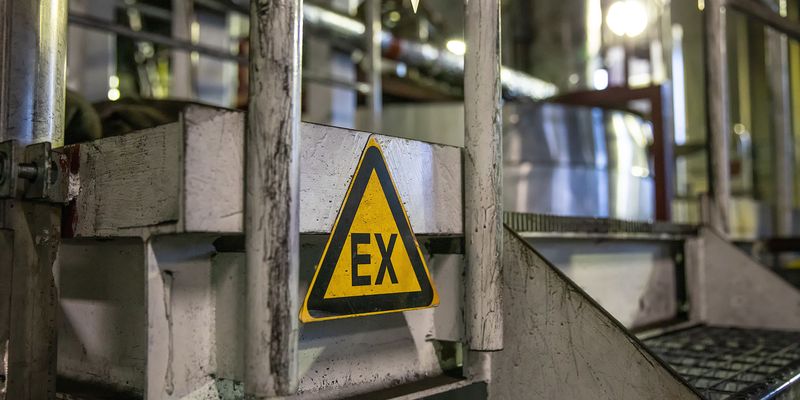
What is ATEX?
ATEX is the European regulatory framework that governs how equipment is designed, manufactured, and operated in potentially explosive atmospheres. ATEX stands for “Atmosphères Explosibles,” and it applies to any environment where flammable gases, vapors, mists, or dusts can ignite. For electronics manufacturers, ATEX defines the mandatory safety, documentation, and traceability expectations that keep people, facilities, and products safe.
Both ATEX directives help protect workers from potential explosions in workplaces with an explosive environment. Since July 2003, all explosive equipment sold in the European Economic Area must comply with ATEX 94/9/EC. The ATEX directive was updated in April 2016 to 2014/34/EU, aligning the requirements more closely with the New Legislative Framework while maintaining strict obligations for manufacturers and operators.
Since March 2010, Newmatik has aligned its quality and documentation processes with customer ATEX requirements for PCB assembly (PCBA), encapsulation, and potting. We routinely support customer-led ATEX audits and help ensure production evidence, traveler documentation, and traceability records satisfy auditor expectations.
ATEX directives and legal responsibilities
Two directives define ATEX responsibilities along the product lifecycle:
- 2014/34/EU (ATEX Equipment Directive): Covers manufacturers, importers, and distributors of electrical and mechanical equipment intended for use in potentially explosive atmospheres. It specifies conformity assessment procedures, quality assurance modules, and CE + Ex marking rules. It replaced 94/9/EC in 2016.
- 1999/92/EC (ATEX Workplace Directive): Sets obligations for employers operating equipment in hazardous areas. It focuses on classifying zones, documenting risk assessments, and maintaining preventive controls that limit ignition sources.
Manufacturers must assign a responsible person, compile a technical file, perform or commission appropriate testing, and retain documentation for at least 10 years. End users must keep the explosion protection document current, ensure workers receive competence training, and verify that installed equipment matches the approved ATEX category.
ATEX zones and equipment categories
ATEX requires facilities to categorize hazardous locations by the frequency and duration of explosive atmospheres:
- Zone 0 / Zone 20: continuous or long periods of explosive gas (0) or dust (20)
- Zone 1 / Zone 21: likely presence during normal operation
- Zone 2 / Zone 22: unlikely or short-duration presence during normal operation
Equipment is grouped by environment and protection level:
- Group I: underground mining equipment exposed to firedamp or combustible dust (Categories M1 and M2)
- Group II: surface industries such as oil refining, chemical processing, or food production handling combustible dust (Categories 1, 2, and 3)
Category 1 equipment must remain safe even with two independent faults, Category 2 addresses normal operating faults, and Category 3 covers equipment for low-risk areas. Selecting the correct equipment group and category determines the design rules, testing standard references (EN/IEC 60079 series), and required protection techniques such as intrinsic safety (Ex i), flameproof enclosures (Ex d), or encapsulation (Ex m).
What is an ATEX explosive environment?
A potentially explosive environment contains flammable gas, vapor, mist, or dust that can ignite or explode under certain conditions. These environments are dangerous because once ignited, the fire spreads through the entire atmosphere.
Examples of flammable substances in the air include gasoline, liquified petroleum gas, paint, varnish, solvents, and dust. An oil refinery would clearly constitute an explosive environment, but so would a packaging plant for flour or a milling factory due to the fine particulate in the air. In these industrial settings, equipment must be protected against becoming an active ignition source.
With ATEX, workplaces are classified as zones based on their relative risk of explosion. Special attention is paid to protecting the environment from effective ignition sources, which include lightning strikes, mechanically generated sparks, electric sparks, high surface temperatures, radiation, and electrostatic discharge.
ATEX requirements for electronics manufacturing
Designers and manufacturers of printed circuit board assemblies must integrate ATEX compliance into the entire product lifecycle:
- Conduct ignition source risk assessments early in the design process and document assumptions about ambient conditions, gas groups, and maximum surface temperatures.
- Align schematic design with recognized protection concepts such as intrinsic safety, flameproof enclosures, or increased safety housings, and ensure creepage and clearance distances fulfill EN 60079-11 or EN 60079-7.
- Maintain traceability of all safety-critical components, enclosure materials, gaskets, and potting compounds, confirming they carry ATEX or IECEx certificates that match the specified temperature class and gas group.
- Establish documented manufacturing instructions that control soldering profiles, conformal coating thickness, encapsulation ratios, and torque settings for fasteners to avoid voids or mechanical stress that could compromise ATEX ratings.
- Validate the finished PCBA through functional tests, dielectric strength checks, leakage current measurements, and, when required, third-party notified body inspections.
ATEX compliance workflow with Newmatik
Newmatik provides an end-to-end workflow that helps electronics brands achieve and maintain ATEX compliance:
- Feasibility and DFM review: We evaluate bill of materials, layout files, and certification targets to confirm ATEX category alignment and identify gaps.
- Process qualification: Our engineering team defines process controls, work instructions, and traceability checkpoints that auditors expect for ATEX quality assurance modules (Module D, E, or F).
- Controlled production: Every build follows locked-down traveler documentation, MES checkpoints, and calibrated tooling to keep ignition sources within the specified limits.
- Documentation package: We compile inspection records, certificates of conformity, functional test evidence, and serialization data to feed your technical file and explosion protection document.
- Continuous improvement: Post-build reviews feed corrective actions and lessons learned back into the process so subsequent ATEX batches ramp faster with less risk.
ATEX and components used in electronics assemblies
During PCB assembly and encapsulation in housing or coating, the specifications according to the ATEX type-examination certificate must be upheld. Encapsulation ensures that sparks, which can arise from switching circuits in electronics (especially relays in high-voltage or high-current circuits), do not penetrate to the outside.
Some components that guarantee the safety of the system must have ATEX approval, meaning that these components must have an ATEX certificate, which attests that the component purchased meets the specifications as listed in the data sheet. An ATEX certificate also serves as proof of conformity in the event of damage. In production, proof or correct assembly must be provided for individual components used in intrinsically safe circuits. These components are specified in the type-examination certificate.
ATEX documentation and testing expectations
Every ATEX project must maintain a living technical file that combines design data, risk analyses, and production evidence:
- Explosion protection document summarizing zone classifications, ignition hazard mitigations, and maintenance intervals
- Bills of materials with manufacturer part numbers, ATEX certificates, temperature ratings, and traceability links to incoming inspection lots
- Detailed assembly drawings, wiring diagrams, and PCB layout records that confirm creepage, clearance, and protective separation distances
- Verification and validation records, including dielectric withstand tests, temperature rise measurements, IP ingress protection reports, and, when applicable, spark ignition lab results
- EU Declaration of Conformity referencing the harmonized standards applied (EN 60079 series, EN ISO 80079-34) and the notified body certificate
Keeping these documents synchronized with each production release is essential for future recertification, change control, and post-market surveillance obligations under the ATEX framework.
Why PCBA with an ATEX-experienced EMS?
If your products are used in areas with an explosive atmosphere, you must be able to demonstrate that your product or equipment conforms with applicable national or international directives. ATEX compliance allows you to sell and use your products in Europe. Partnering with an ATEX-experienced electronics manufacturing services provider gives you:
- Confidence that notified body requirements are implemented on the production floor
- Experienced teams who understand ATEX marking, labeling, and documentation protocols
- Manufacturing traceability that supports both ATEX and IECEx certifications
- Faster time-to-market when launching products into hazardous locations